
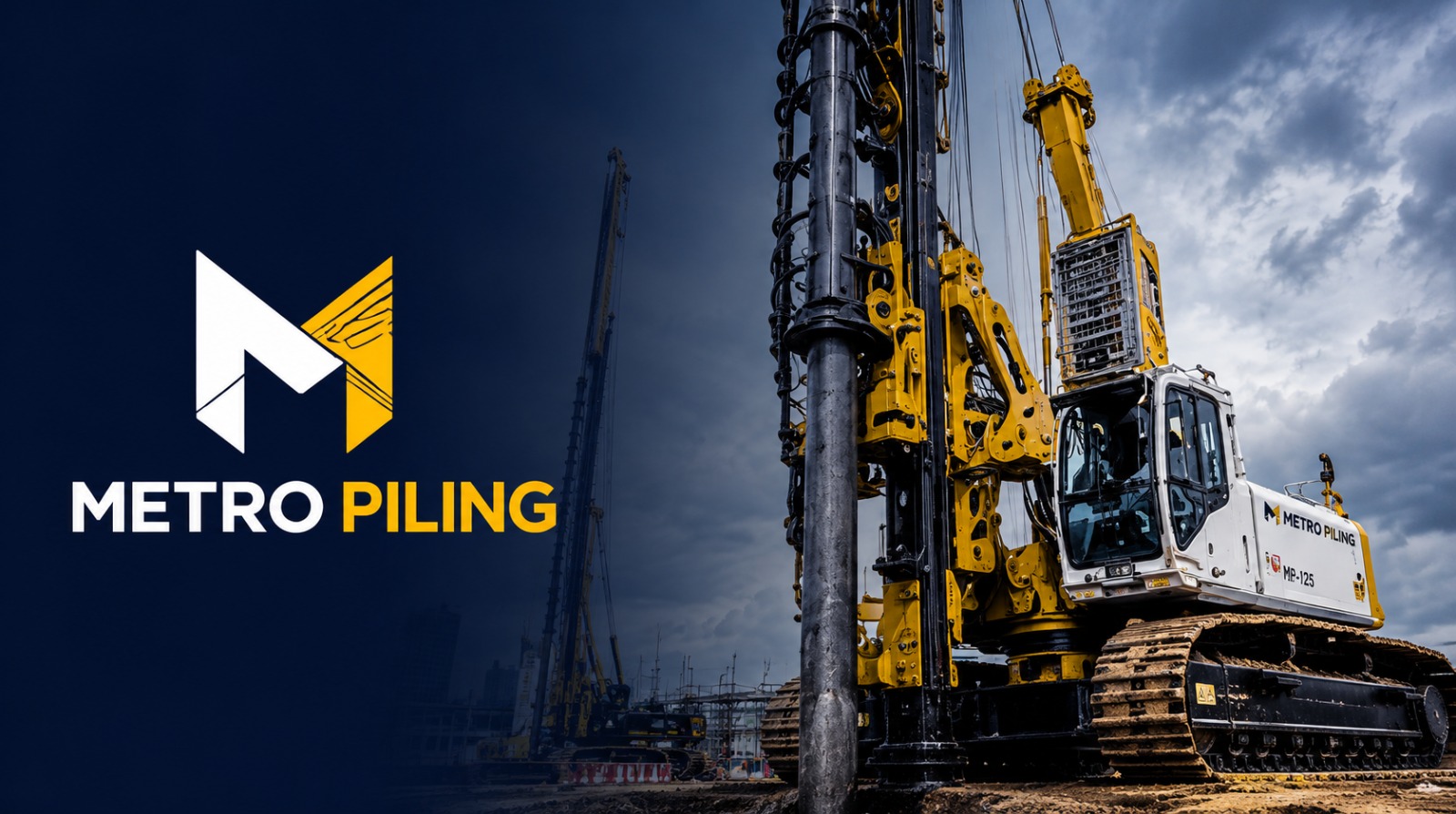
The process of piling plays an important role in the foundations of construction projects such as buildings, bridges, and others. Piles are used to make deep foundations and distribute weight to compacted soil or rocks under the surface of the structure. There are many types of piling processes available; each type has its own pros and cons. The most common types of piling methods are CFA (Continuous Flight Auger) and driven piles.
This blog explains the commonly used types of piles, their method of installation, pros and cons, and helps you identify which type is suitable for your construction project.
What are CFA Piles?
The process of CFA piling starts by drilling a continuous flight hollow auger into the ground to the required depth. When the targeted depth is reached, the concrete mix is continuously pumped through the hollow centre stem, and the auger is slowly extracted. After extraction of the auger, the ready-made steel rebar cage is immediately immersed into the freshly poured concrete. This type of pile is used in unstable, collapsing soils and where the groundwater table is high. It is preferred due to its easy installation, vibration-free nature and depth performance.
What are the Common Uses of CFA Piles?
There are many uses of CFA piles; some of these are given below:
Retaining Walls
CFA piles are used in the construction of retaining walls to strengthen slopes and prevent soil depletion.
Foundation Support
CFA piles provide support to buildings and other structures and effectively distribute weight to the compacted soil.
High-Rise Buildings
They provide support to the heavy vertical loading while building high-rise structures. CFA piles are commonly used in metropolitan areas.
Bridge Construction
CFA piles provide a solid foundation for supporting bridges to make sure structural integrity.
Infrastructure Projects
CFA piles offer a strong foundation for significant developments. They are crucial for various infrastructure development projects such as roads, airports, and trains.
Benefits of CFA (Continuous Flight Auger)
- Provides quiet operation, making it effective for city and residential zones.
- Virtually vibration-free, protecting nearby buildings.
- High production rates make piles profitable.
- A broad range of auger sizes between 300mm and 1200mm in diameter allows for efficient use of construction materials.
- CFA piling is effective for low to mid-range loads, with depths reaching up to 25m. This is why it is appropriate for most commercial and residential projects.
Disadvantages of CFA (Continuous Flight Auger)
- CFA piles can be adapted, but may not be fitted for very soft soils or a particular type of loose ground.
- Additional measures can be taken, such as steel casings, which are important when doing work on sandy soil beneath the water table to avoid wellbore collapse.
- If the material leaks out of the system, it can lead to extremely dry concrete and make the installation process slow during concrete curing.
- The project’s size may require a large scale of construction traffic for the delivery of supplies and debris clearance.
How Much Do CFA Piles Cost?
In the UK, CFA (Continuous Flight Auger) piles can cost £150 and £300per linear metre, based on the site depth, soil conditions, and pile diameter.
What Are Driven Piles?
Driven piles are deep foundations, factory-made structural columns that are hammered, vibrated, or reinforced into the earth to support buildings. They are in square sections and created in short lengths in one-meter intervals between 3 and 14 meters. These piles are pre-cast and can be easily connected to fulfil the length needed without compromising the design load capacity.
What Are the Common Uses of Driven Piles?
There are many uses for driven piles. Some of the common uses are listed below:
Heavy Construction Support
Driven piles are perfect for construction projects like bridges or high-rise buildings that require deep foundations.
Building Foundations
They support heavy structures such as residential, commercial and industrial buildings when topsoil is weak.
Ground Versatility
Driven piles are used for building bases in many types of soil, like rocky or sandy soils.
Retaining Walls
They provide lateral support to hold back soil and earth in uneven terrain or excavation.
Bulkheads and Seawalls
They also act as shoreline protection, waterfront barriers against erosion and water pressure.
Benefits of Driven Piles
- Driven piles can be pre-made off the site, enabling quick setup to install on-site.
- They eliminate wet concrete management on-site, reduce labour, and make them less expensive.
- As driven piles are pre-made, they never generate waste, saving clean-up time.
- Ready to support the structure as they are prefabricated, unlike poured concrete.
- When hammering the piles, it pushes the soil tighter, making the ground stronger.
Disadvantages of Driven Piles
- For driven piles, proper planning and handling are needed, as well as on-site heavy machinery.
- The vibrating hammers create loud noises, and strong vibrations interrupt nearby people.
- They cannot be pushed in thick rock layers, which stops them from reaching the needed length.
- They are not preferred for compacted sites, as the foundation of the structure nearby may be affected during the installation process.
How Much Do Driven Piles Cost?
In the UK, the cost ranges between £150 and £300 per linear metre, depending on the project size, material and site condition.
Final Thoughts
CFA and driven piles can be selected on the basis of soil conditions, project specifications, and environmental factors. Both types have their benefits and drawbacks. CFA piles are preferred in urban areas where noise and vibration are a concern. On the other hand, driven piles are suitable for situations where deep foundations are needed, especially in soil compaction.