
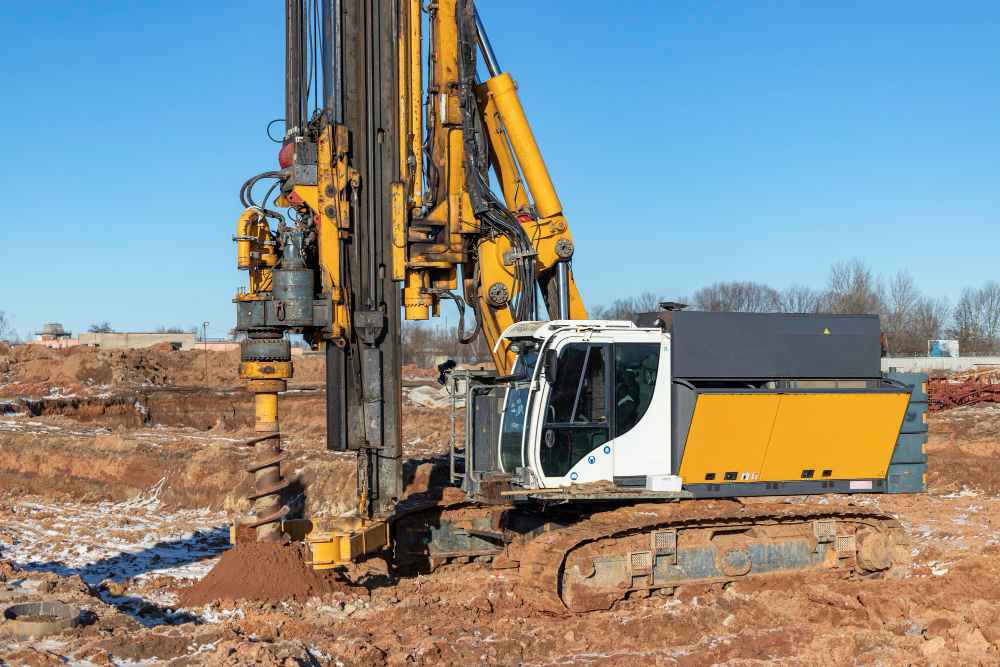
Pile foundations are deep supports, typically cylindrical or elongated columns constructed from concrete, steel, or timber. They serve to transfer the building’s load to more stable and stronger soil.
Piles are usually installed when the upper soil layer lacks sufficient strength to support the building’s weight. They are commonly used for the construction of high-rise buildings, bridges, and commercial structures where shallow foundations do not provide adequate support.
Discover types, construction methods, and benefits of pile foundations along with the necessary tips for choosing the right pile foundations for your property.
When Should We Use Pile Foundations?
In construction, every construction project has its own specific foundation needs. The most common scenarios where pile foundations are suitable are,
- When the underground water level is too high for traditional foundations.
- In the construction of high-rise heavy-load structures or buildings.
- When the construction site is near a riverbank or any water channel.
- The implication of other foundation types is expensive and impractical.
- When it becomes impossible to keep the foundations dry due to seepage.
- When the excavation of the soil to the required depth is not possible due to soil conditions.
Where are Pile Foundations Used?
The specific construction sites where pile foundations are used are.
- Residential Projects: For small homes and residential buildings
- Urban construction: For high-rise buildings with limited space.
- Coastal regions: Due to the high groundwater level.
- Commercial projects: For bridges, flyovers, and towers.
- Industrial construction: For heavy foundations that require vibration resistance.
- Flood-prone regions: To prevent soil movement and waterlogging issues.
Classification of Pile Foundations
Pile foundations are classified based on factors such as material, function, and installation method. Understanding these categories helps engineers and property owners decide on the most suitable pile for the construction project.
Based on Function
End-Bearing Piles
These types of piles transfer the building’s load directly onto the strong soil layer or bedrock. They act as columns, bypassing the weak soil layer to provide the structure with solid support. This type of pile foundation is employed when a suitable load-bearing stratum is present at a readily accessible depth.
Friction Piles
These piles transfer the building’s load by generating a frictional force between the pile’s surface and the soil surrounding it. The amount of friction generated by these piles depends on the soil type. Friction piles are suitable for non-cohesive soils that do not provide sufficient support on their own, such as clay and sand.
Compaction Piles
These are installed to alter the soil’s mechanical properties. They increase soil density and load-bearing capacity by improving its strength, density, and stability. These piles do not carry or transfer the building’s load, but they improve the soil’s mechanical properties.
Based on Materials
Timber Piles
These are the oldest types of pile still being used in construction. They have a moderate lifespan and can be cylindrical or rectangular.
Concrete Piles
Based on their construction and installation method, concrete piles are categorised into two different types.
Pre-Cast Piles: These are cast into moulds and cured before being installed in the ground. They are usually circular in shape and installed vertically. These piles are reinforced with steel to provide additional strength and stability.
Cast-In-Situ Piles: These are constructed by drilling a hole into the ground. First, the soil is excavated to the required depth, followed by the construction of a structural steel frame rebars. After the structure is in place, the hole is filled with concrete, ensuring a stable, strong foundation.
Steel Piles
They are hollow high-grade steel pipes. Once installed, they are filled with concrete. They are small in size and diameter, making them easy to install. Because of this property, they can be used as end-bearing piles.
Based on Installation Method
Driven Piles
They are pre-formed piles and can be made from timber, steel, or concrete. Driven piles are hammered into the ground using heavy machinery, such as pile drivers.
These piles are placed vertically at the desired site and hammered into the ground until they reach the required depth. Driven piles have a high load-carrying capacity and are installed in areas where vibration and construction noise are not a concern.
Bored Piles
Bored piles are referred to as cast-in-situ concrete piles. During the installation of these piles, a borehole is first drilled into the ground, then filled with concrete to build a stable foundation.
It is ideal for urban construction or sites with limited area where minimal noise and vibration are necessary. The process of installing bored piles is typically slow and demands meticulous attention.
Micro Piles
Micro piles are high-strength, small-diameter piles frequently utilised for underpinning foundations. Mainly used in areas with limited access. The primary purpose of these piles is to reinforce the existing foundation.
Pile Foundation Construction: Step-by-Step Overview
The construction of a pile foundation is a lengthy, carefully designed process that requires careful attention and planning. It is carried out in a series of steps to ensure the quality of the process. Different types of piles may have exceptions in construction, but the general roadmap is the same for all.
Major steps in pile foundation construction are,
Site Investigation
Before construction begins, a thorough site survey is conducted. The purpose of the study is to analyse different properties of the soil, such as
- Soil type
- Soil strength and compressibility
- Weight-bearing capacity
- Groundwater level
Pile Selection
After the survey is completed, the appropriate pile type is selected based on the data collected. The choice of the pile depends on the
- Soil condition
- Structural load
- Environmental factors.
- Budget
- Deadline
Pile Installation
Once the appropriate pile is selected, we move towards the installation process. Every foundation has its own dedicated installation method.
Driven piles: These are precast steel or concrete piles that are hammered into the ground using pile drivers.
Bored Piles: First, a hole is drilled into the ground, then reinforced with steel rebars. Once the frame is in place, the hole is filled with concrete.
Screw Piles: These are a type of mini-pile that is mechanically screwed into the ground at the construction site using drills and heavy equipment.
Pile Cap Construction
After installing all the piles, a pile cap is built to evenly distribute the structure’s weight across them. These caps act as a connector between the pile and the structure. Reinforced concrete is used to build the pile caps to ensure rigidity and effective load transferring.
Final inspection (Quality control)
After construction is complete, the foundations are tested to verify their proper functionality and safety. A load test is conducted to measure their load-bearing capacity, stability, and strength. This quality test ensures that the alignment of all the installed piles meets the required safety standards.
Criteria for Selecting the Right Pile Foundation
Pile selection is a complicated process that requires proper planning and consideration. Some major factors involve site validation, formulation, and design optimisation.
The key factors to consider when selecting the appropriate pile foundation type are:
General factors
- Budget
- Site location
- Available resources
Technical Factors
- Soil condition and type.
- Groundwater level
- Type of building
- Depth of the foundation
Benefits of Pile Foundations
Pile foundations are widely used in construction due to their versatility and numerous benefits. The significant advantages of pile foundations are,
Load-bearing Capacity: Pile foundations have a high load-bearing capacity, making them suitable for high-rise buildings and infrastructures.
Versatility: A pile foundation can be used in different soil conditions, increasing its utility and flexibility.
Space requirement: Due to their vertical form, they require less space and can be used in buildings with limited area and access.
Durability: Pile foundations are engineered to resist natural ground movements. This makes them highly durable, reliable, and a preferred choice for all property types.
Common Challenges in Pile Foundation Projects
While pile foundations offer exceptional strength and stability, their construction may present some challenges for the engineer that need careful attention. These challenges can be,
Groundwater Problems
High groundwater levels can make drilling for the piling difficult. The surrounding soil can collapse if proper monitoring is not in place.
Misalignment
Installing the pile at the correct site and at the proper angle is the most crucial aspect of pile installation. An off-position pile can cause the building to de-stabilise and reduce its load-bearing capacity.
Safety Concerns
Pile installation involves heavy machinery and equipment. As a result, there is a significant risk to workers’ safety. Handling incidents caused by equipment malfunctions and improper handling needs to be addressed on an emergency basis.
Conclusion
Pile foundations are crucial for maintaining the safety and stability of modern structures and buildings. Their ability to transfer the building’s load to a more stable soil makes them a popular choice for foundation construction.
By understanding the types, construction process, and key selection criteria, structural engineers at Metro Piling LTD can design a foundation that maximises the pile’s load-bearing capacity while minimising safety risks.