
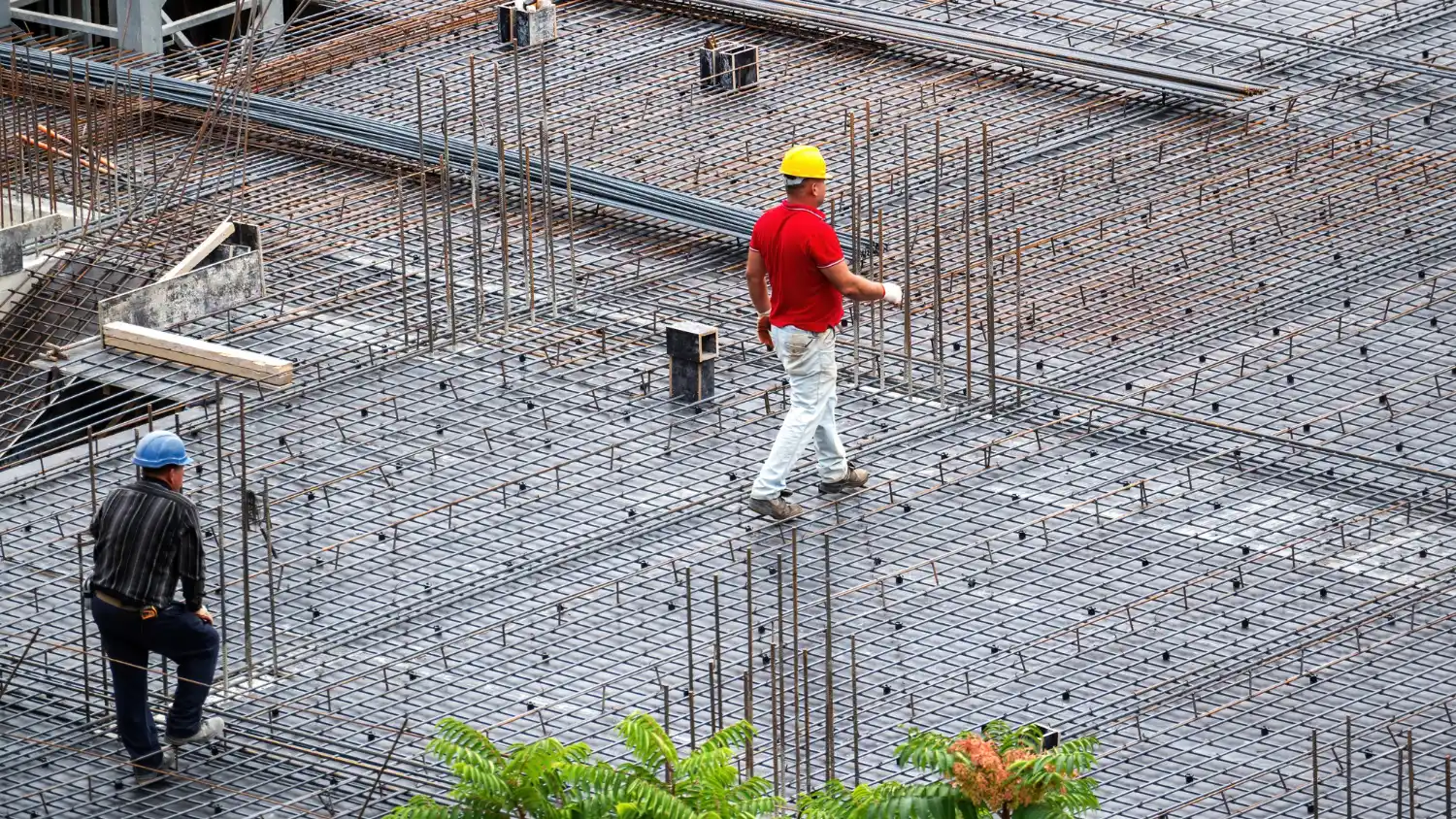
Concrete piling is an essential foundation method used in modern construction projects around the world. This technique assists in absorbing loads from buildings, bridges, towers, etc., by transferring building loads deep into the ground, where the soils are often stronger and more stable than at the surface.
When the ground surface does not have the capacity to support the structure’s weight due to weak soils, the engineers use concrete pile systems as a means of creating a safe and secure foundation by installing structural piles into the ground. Piles are designed to be installed in such a way as to improve the stability of the structure and prevent it from settling, thus increasing the durability of the building.
In this guide, we will cover all the aspects of concrete piling, including types of concrete piles, uses of concrete piles, methods of installing concrete piles, benefits and drawbacks of using concrete piles, and methods of maintaining concrete piles.
What are Concrete Piles?
Concrete piles are vertical columns made from reinforced concrete, which are placed into the ground by driving or drilling them. They have been traditionally classified as types of deep foundation systems, as they are used when a shallow foundation system would not adequately support the weight of a structure.
The primary function of a concrete pile is to distribute the load of a structure through a weaker layer of soil and transfer the loads down to a deeper layer of either soil or rock that can safely support the structure’s load. Concrete piles may be used in residential, commercial, industrial, and infrastructure development projects.
Most concrete piles contain either reinforcing bars or reinforcing cages made out of steel to provide the necessary strength and durability to the structure.
How Concrete Piles Work?
Concrete piles are used to support the weight of the building by transferring it down through the ground to a depth where there a strong and stable foundation can be laid.
Concrete piles support buildings in two primary ways:
End Bearing Piles – Place the weight of the building directly onto a hard substrate, such as solid rock or dense soil.
Skin Friction Piles – These rely on the friction between the surface of the pile and the surrounding soil to support the load of the building.
In most projects, piles use a combination of both methods to maximally support structures.
Types of Concrete Piles
Concrete piles vary in style and type based on their use in a project:
Precast Concrete Piles
They are made in the factory and then moved to the building sites. They are installed into the ground using heavy equipment. They provide the benefits of quality control, strength, and fast installation.
Cast-in-Situ Concrete Piles
These are put in place on the construction site by drilling a hole and filling it with concrete. They have the benefits of flexible size, is good for small jobs, and produces less vibration during installation.
Reinforced Concrete Piles
Piles are strengthened with steel reinforcements to support high loads and prevent damage to structural foundations. These piles offer high strength, incredible durability, and are used for large structures.
Prestressed Piles
The prestressed concrete piles utilises a prestressed cable system to increase the strength of the pile, which results in the ability of these piles to carry more weight and be less likely to crack during construction. They have the characteristics of a long lifespan, superior strength, and greater resistance against stress.
Uses of Concrete Piles
Concrete piles are a widely used foundation element for different kinds of construction projects. Common applications of concrete piles include:
- High-rise uildings
- Bridges
- Flyovers
- Dams
- Marine Structures
- Industrial Plants
- Towers
- Residential Buildings
- Retaining Walls
Concrete piles have great advantages in areas where soils are weak or waterlogged.
Advantages of Concrete Piles
Concrete pile foundations have numerous advantages for construction projects.
High Load-Bearing Capabilities: Concrete pile foundations can support very heavy buildings without failing.
Durability: Concrete piles are impervious to damage from moisture, corrosion, and weather.
Long Life: With the correct design and appropriate maintenance, concrete piles can last for decades.
Suitable for Poor Soil: Concrete pile foundations can create stability in unstable soil conditions.
Fire Resistance: Concrete is much more fire-resistant than many of the alternative foundation materials.
Low Maintenance: Once correctly installed, concrete piles need little to no maintenance.
Disadvantages of Concrete Piles
Although concrete piles have many advantages, they have some limitations as well:
Piles are Heavy: Transporting and handling concrete pile materials is very difficult.
Noisy Installation: Driving piles into the ground generates a significant amount of noise and vibration.
Higher Initial Cost: Concrete piling systems usually exceed the cost of shallow foundations.
Possibility of Cracking: Improper handling of concrete piles could lead to breakage.
Need for Skilled Labor: A group of qualified engineers and skilled workers must install the concrete piles properly.
Concrete Piles Installation Methods
Soil conditions and requirements for a given project will dictate which method is utilised for the installation of concrete piles. There are two main types of installation techniques, including:
Driven Piles
Precast piles that are driven into the ground using pounding devices. Driven piles are fast to install and offer greater strength. Noises and vibrations produced during the process are the disadvantages of driven piles.
Bored Piles
A hole is drilled into the ground, then steel reinforcement cages are put in the hole and finally filled with cement. Bored piles produce less noise and work well in urban areas relative to the driven pile system. The disadvantages of these piles are that they require more time for installation due to the two-step application of the plastic rebar before cement application.
Factors to Consider Before Choosing Concrete Piles
You need to evaluate various factors before selecting a pile type:
- Soil Condition – The type and strength of soil are the major contributors to pile selection.
- Load Requirements – When building structures are heavier, stronger, and deeper, piles are needed.
- Groundwater Level – The conditions of water in the ground may alter installation methods and affect long-term durability.
- Budget – Cost is an important factor in planning your pile foundation system.
- Site Access – Access may limit the types of pile installation equipment that can be used.
- Environmental Impacts – Both the noise produced during installation and the impact of vibrations on structures adjacent to the site will need to be considered.
Conclusion
Due to their reliability and widespread use, concrete piles are one of the most common foundation solutions utilised in contemporary construction. When dealing with weak or unstable soil, a concrete pile can provide a high level of support to your structure as well as help to enhance its safety, stability, and durability over time.
This is a variety of different concrete pile options available for various construction applications. Choosing the correct concrete piling technique for your project will depend on the underlying soil conditions, load requirements, and overall project budget.
Higher initial construction costs and installation complexity are two major considerations associated with concrete piling. However, the long-term durability and performance of concrete piling relative to other deep foundation systems available today are reasons for its extensive use.